Education
What's the Difference Between Indica and Sativa?
The age-old question. Here is what the science actually says about how different cannabis strains affect you.
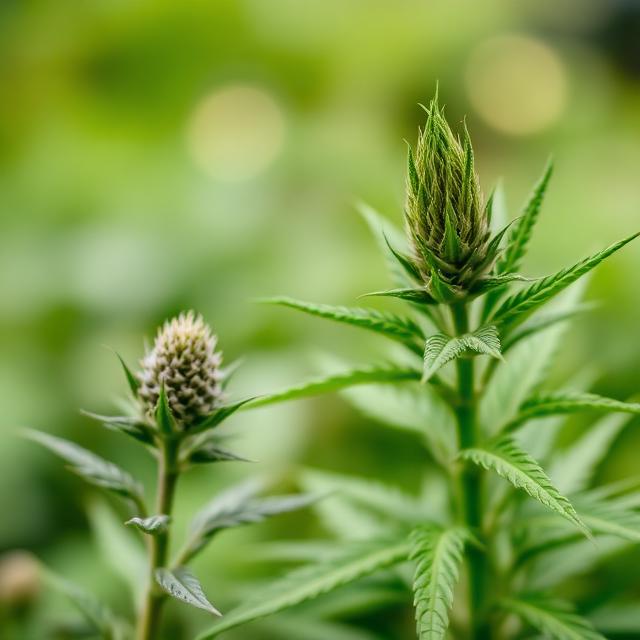
Indica and sativa are often treated as a settled matter of fact, one word promising sleep on the couch and the other promising a productive afternoon, and most people repeat that rule without ever asking where it actually came from. At Bored N Buzzed, this comes up in conversation daily, and the honest answer is a little more complicated than the shorthand suggests, which makes it worth actually unpacking before it decides your next purchase for you.
The indica and sativa classification began as a matter of botanical observation rather than effect. In the eighteenth century, a French naturalist named Jean Baptiste Lamarck was cataloging plant species from around the world when he noticed that cannabis plants growing in India looked noticeably different from those growing in Europe, with the Indian plants shorter and bushier with wide leaves while the European plants grew tall and lanky with thin leaves. Lamarck named the shorter plant "Cannabis Indica", after its origin country India, and the taller one "Cannabis Sativa", and that distinction was based entirely on physical structure, including little about how either plant would actually affect the person consuming it.
The idea that indica produces sedation while sativa produces energy developed much later, largely through decades of underground cultivation and word of mouth passed along long before any controlled research existed to test whether the claim held up. Indica became shorthand for sleepy and relaxed, while sativa became shorthand for energized and social, and those labels stuck around mostly because they were easy to remember and easy to repeat to a friend. The trouble is that modern cannabis breeding has moved far beyond those original plant shapes, so that most products sold today are hybrids whether they are labeled that way or not, which means two products both labeled indica can still produce noticeably different experiences from one another.
Since a plant's shape and its label might not reliably predict how it will actually feel, it is worth asking what factor does define each experience more accurately. This is the part of the conversation our staff finds most useful to walk customers through, since the answer comes down largely to terpenes.
Terpenes are the aromatic compounds behind a product's smell, whether it leans skunky, citrusy, piney, or earthy, and their role extends well beyond scent alone. Researchers studying cannabis believe terpenes interact with cannabinoids to shape a product's overall effect, a relationship often referred to as the entourage effect, so that a product high in myrcene tends to smell earthy and musky while one high in limonene tends to smell bright and citrusy. Paying attention to a product's terpene profile offers a far more reliable signal than its indica or sativa label ever could.
Cannabinoid ratios play a role as well, since THC and CBD tend to receive most of the attention even though they never act in isolation, and the minor cannabinoids present alongside them help shape the overall experience in ways a single word label was never designed to capture.
This is the thinking behind how our team approaches recommendations at Bored N Buzzed, rather than pointing a customer toward a shelf labeled sativa and calling it a day, our staff would rather talk through terpene profiles and the specific experience a customer is actually looking for. Customers new to cannabis get a clear, unhurried explanation without unnecessary jargon, while customers who already know their way around a terpene chart can indulge in a deeper conversation to match.
To make that easier, select items on our menu list their terpene profiles right alongside the product, so you can start keeping track of which terpenes you tend to gravitate toward over time and build a genuine sense of preference rather than guessing from a label alone.
The next time you are choosing between two products, consider setting aside the indica or sativa question and asking instead what the product smells like and what it actually contains, since that approach tends to offer a far more accurate picture of what to expect.
Stop by and talk through terpene profiles with our team in person. We are located right off 124th Ave NE, open daily.
This content is for general educational purposes only. Individual experiences with cannabis products may vary. Cannabis has intoxicating effects and may be habit forming. For use only by adults 21 and older. Keep out of reach of children.